 Team Pulsara
Pulsara Around the World - October 2026
 Audrey Peart: Sep 30, 2026
September Recap After a light summer, our events schedule is ramping back up for the final months of 2026. With 10 shows under our belt this month...

Over the past decade, a growing body of research is establishing a powerful consensus: cross-functional, real-time care team communication is a foundational imperative for emergency care response—particularly around time-sensitive incidents such as stroke, STEMI, and MCIs. When communication barriers are removed and interoperable collaboration is streamlined, clinicians can focus on what matters most: delivering timely, effective care.
This is the new standard of care.
As the leading communication and logistics platform for emergency care, clinicians and researchers are putting Pulsara to the test in real-world environments. The following third-party, peer-reviewed research studies demonstrate Pulsara's clear and consistent efficacy. Organizations and care teams that utilize Pulsara experience faster and easier care coordination, reduce treatment delays, and improve outcomes across entire systems of care.
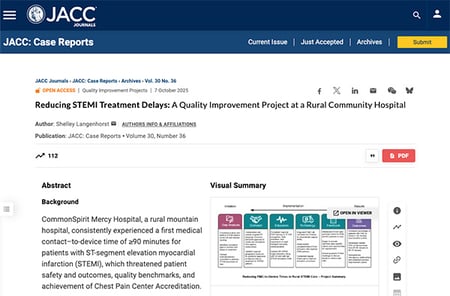 31% median improvement in STEMI FMC-to-device times; STEMI patients achieving FMC-to-device times of ≤90 minutes went from 50–66.7% to 95%
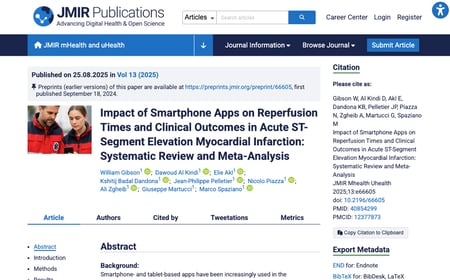 Pulsara, and similar smartphone-based interventions, significantly reduce reperfusion times; case management, resource allocation, and patient outcomes also improved (STEMI)
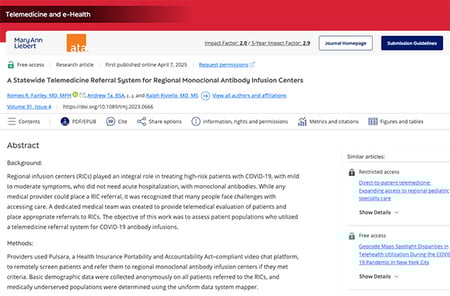 Definitive value found utilizing Pulsara for telemedicine initiatives: 6K+ COVID-19 (many rural / limited access) patients successfully supported during severe resource-constrained MCI
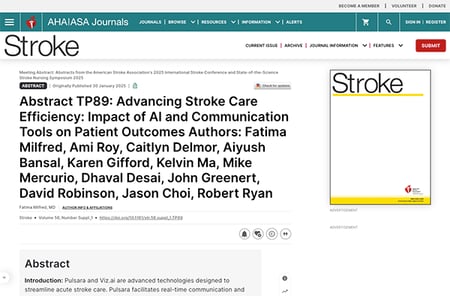
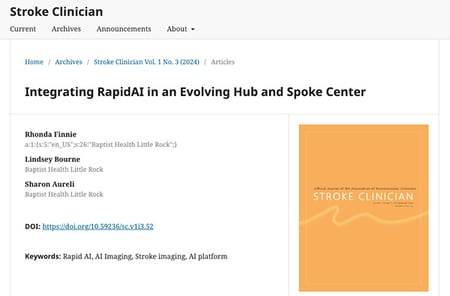 Improved relationships with EMS while streamlining provision of performance feedback (Pulsara + RapidAI Integration)
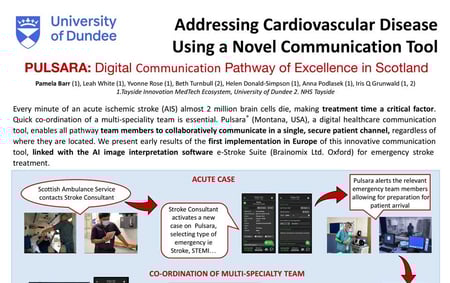 Proven effectiveness for reduced Door-to-CT times, with trend toward improved patient outcomes (Stroke)
View/download PDF study abstract from University of Dundee, 2023
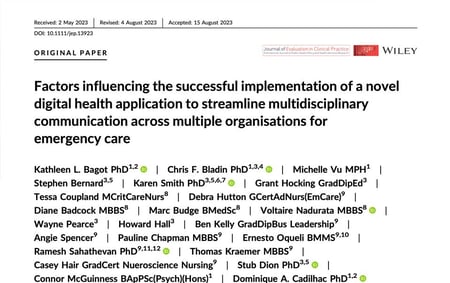 Successful multi-organization implementation with wide acceptance of Pulsara for prehospital and intra-hospital care
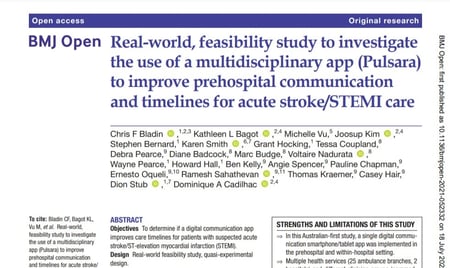 Improved care timelines for STEMI and stroke, including 44-minute faster average Door-to-CT times for stroke
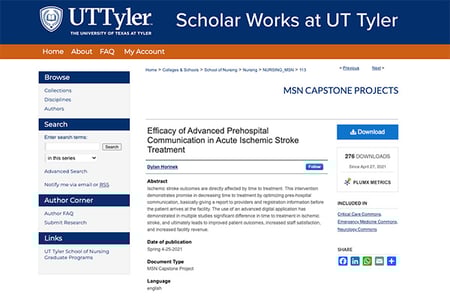 Implementation of prehospital communication technologies such as Pulsara found to significantly improve treatment times and outcomes (Stroke)
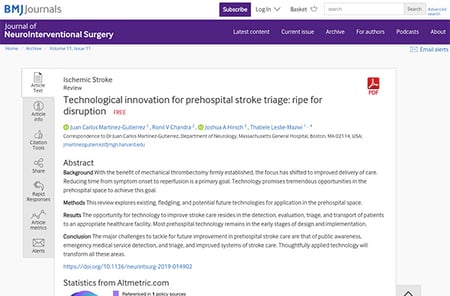 New communication technologies like Pulsara deemed necessary to disrupt ineffective triage protocols (Stroke)
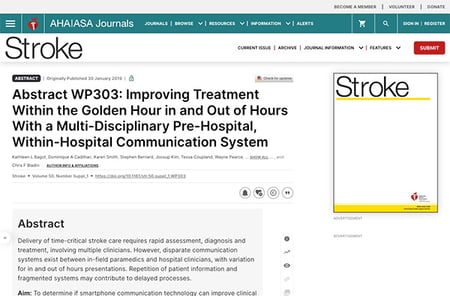 Improved care metrics, including a two-fold increase in cases meeting 60-minute Door-to-Needle benchmark (Stroke)
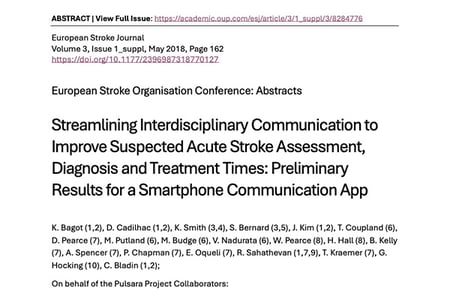 51-minute improvement in median Door-to-CT completion times (Stroke)
 Improved care timelines and ease of use found to be most influential factors for successful adoption of Pulsara
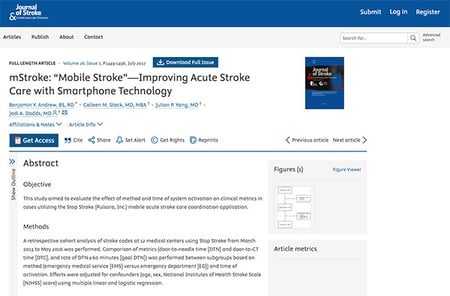
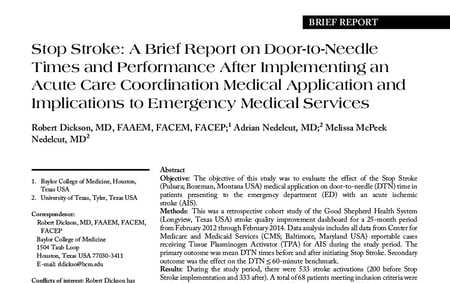 28% faster Door-to-Needle times, and 60-minute benchmark success increased from 32% to 82% (Stroke)
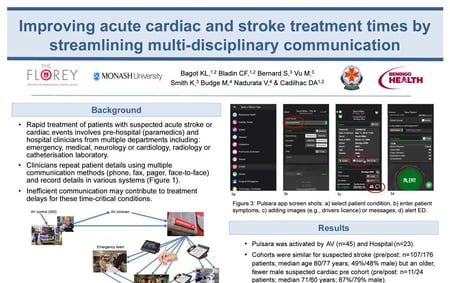 Faster Door-to-Balloon times for STEMI, and faster Door-to-CT and Door-to-Needle times for stroke
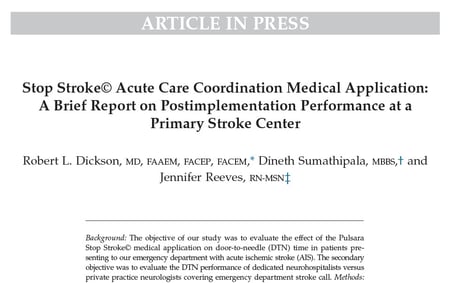 46% improvement in median Door-to-Needle times (Stroke)
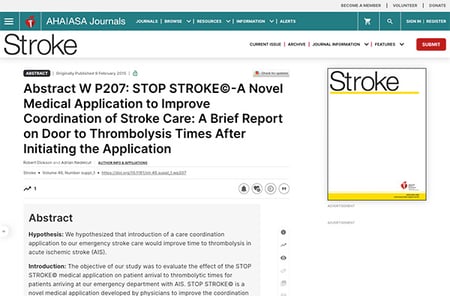 22-minute reduction in Door-to-Needle times, a 28% improvement (Stroke)
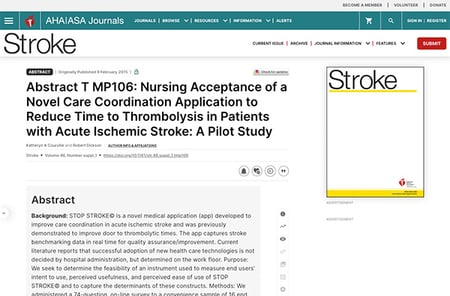 Overwhelming consensus among ED nurses on Pulsara ease-of-use, usefulness, patient benefits, and intention to continue use
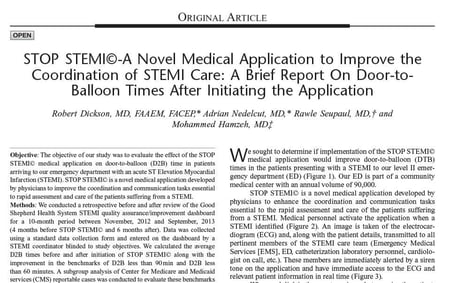 22% faster Door-To-Balloon times; better 60-minute and 90-minute benchmark success rate (STEMI)
This decade of data-driven research demonstrates a clear and consistent pattern: Pulsara works. From stroke and STEMI treatment to system-wide coordination, clinical research findings consistently and repeatedly show the value and effectiveness of Pulsara; teams move more quickly and work together more effectively, treatment times are reduced, and patient outcomes improve. As healthcare continues to evolve, these findings reinforce the critical role of unified communication in delivering better outcomes at scale.

Want to learn more about how organizations are using Pulsara to achieve faster treatment times and better care coordination? Check out 10 Ways Pulsara Helps During Time-Sensitive Emergencies.
 Audrey Peart: Sep 30, 2026
September Recap After a light summer, our events schedule is ramping back up for the final months of 2026. With 10 shows under our belt this month...
 Audrey Peart: Jul 30, 2026
July Recap Supporting Medical Response with Connected CommunicationBetween World Cup matches and fan events, fire/EMS, hospital, and emergency...