 Hannah Ostrem

Pulsara Around the World - October 2026
 Audrey Peart: Sep 30, 2026
September Recap After a light summer, our events schedule is ramping back up for the final months of 2026. With 10 shows under our belt this month...
Since they started using Pulsara's Stop Stroke module, hospital teams across the U.S. have been shaving time off of their cases, ultimately saving their patients tissue and reducing their recovery times. But now, there is hard data to show just how much time is being saved.
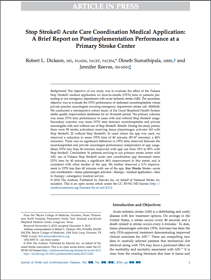 A new research study conducted at Good Shepherd Health System, and published in the Journal of Stroke and Cerebrovascular Diseases, has shown an average reduction in Door-to-Needle (DTN) time of 40 minutes (a 46% reduction)! Additionally, mean DTN less than 60 minutes improved from 18% to 85% with Stop Stroke. Since 2 million brain cells die every minute when a patient is having a stroke, saving 40 minutes on a stroke case can mean the difference between functional rehabilitation and a future bound for a nursing home.
 Audrey Peart: Sep 30, 2026
September Recap After a light summer, our events schedule is ramping back up for the final months of 2026. With 10 shows under our belt this month...
 Audrey Peart: Jul 30, 2026
July Recap Supporting Medical Response with Connected CommunicationBetween World Cup matches and fan events, fire/EMS, hospital, and emergency...